
The K Continues To Widen

The US and Iran are in a state of perpetual “talks” while energy markets are stabilizing in a higher range. It’s unclear whether ships are moving through the Strait of Hormuz, and with the blockade getting enforced, there may still be some upside risk to energy prices and supply chain disruptions.
Despite that, the blast radius of the US-Iran war is receding as the equity markets have moved on. Systematic flows and discretionary short covering are driving a powerful rally back toward the highs and the market is shifting its focus back on to the AI supercycle. The bottom end of the K-shaped economy continues to struggle, with tighter liquidity conditions, private credit woes, and higher energy prices creating a heavy drag.
None of this may matter for the top end of the K as the growing demand for AI tokens is an unstoppable force that supersedes economic forces. The launch of Openclaw just several months ago ushered in the era of agentic AI, sparking a Cambrian explosion of use cases and with it, an exponential increase in the demand for compute. As AI gets more powerful and useful, the demand for tokens increases and spurs investment in more gigawatts of compute and innovation towards more efficient compute (more tokens per dollar and more tokens per gigawatt). As compute becomes cheaper and more readily available, AI in turn becomes more powerful and useful. The flywheel will continue to accelerate until AI spending becomes such a large share of the global economy that it slows down under its own weight.
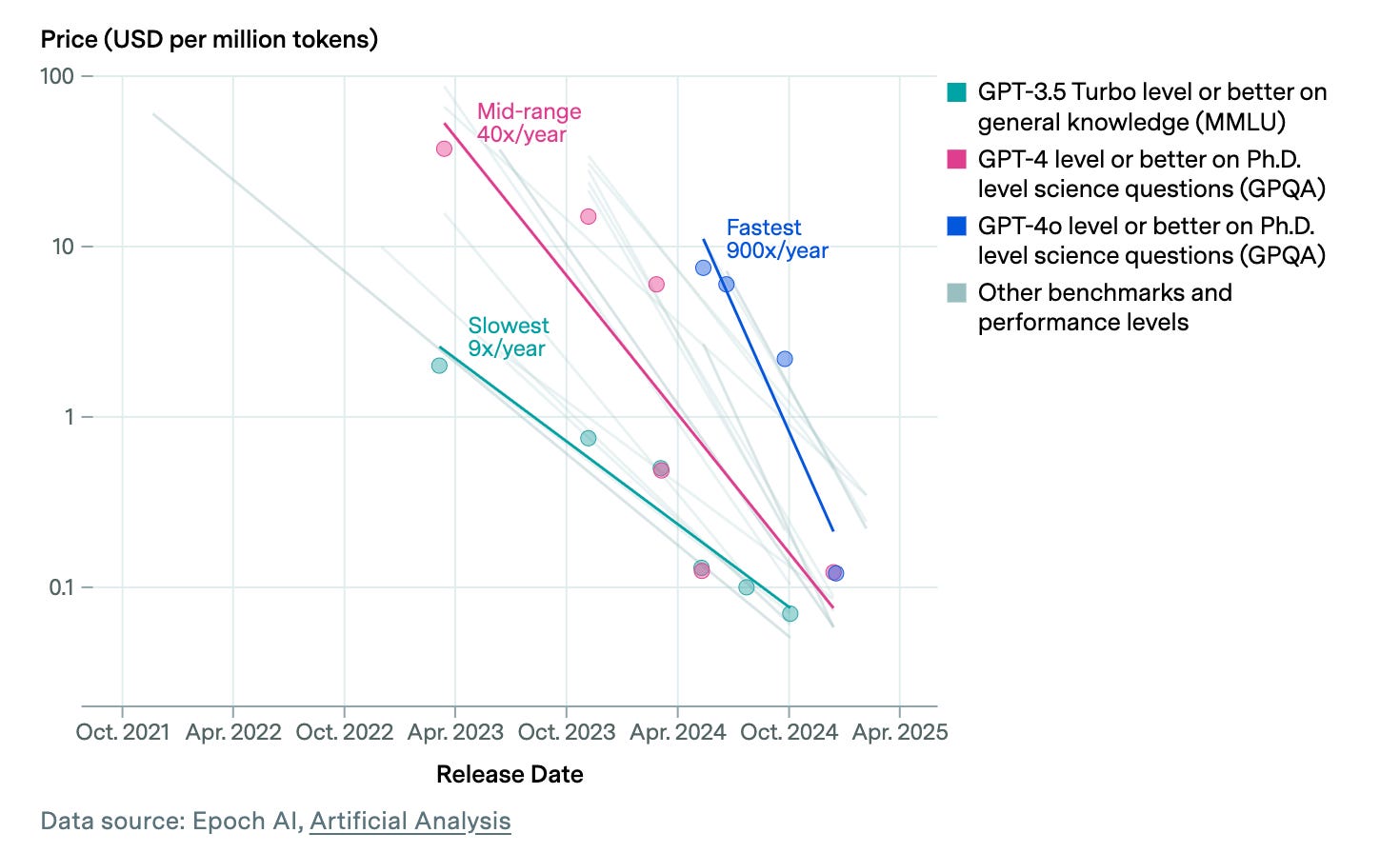
This interview of Dario Amodei (founder of Anthropic) helped give me a framework for how AI capex spending can continue to rise alongside accelerating revenue and demand for AI tokens. It’s an inside look into the economics of running one of the largest LLM and agentic application business in the world.
Anthropic’s annual revenue run rate has surpassed that of OpenAI despite having raised less.
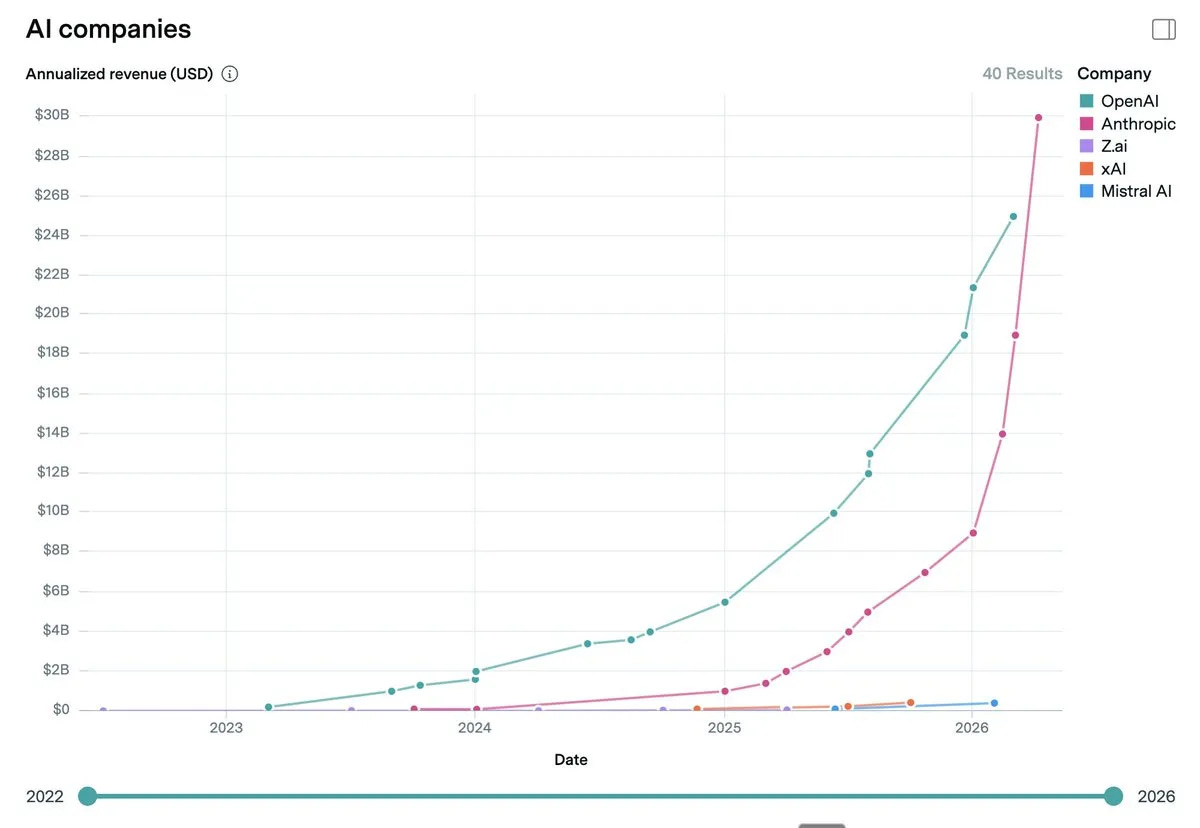
Must of the value derived from AI won’t show up in GDP or corporate revenues. It will show up as a massive consumer surplus1 - the time saved by querying an LLM instead of digging around on the internet, the money saved by vibe-coding an app instead of paying an annual subscription on an existing SaaS product, the effort saved from having a robot at home instead of doing housework.
I have no doubt that many industries are getting disrupted and jobs displaced, but I that demand will shift away from commoditized products and services towards things that come with a human touch. Alex Imas explains it well in his Substack post:

But the economics of structural change, combined with deep-seated features of human preferences, suggests something different: as people get richer, they don’t just want more commodities. They want things that aren’t commodities in the standard sense of the word. The social aspects of products such as the relationships, the status, and exclusivity—what Rene Girard called the mimetic properties of desire—become much more relevant once people’s basic needs are satisfied. And the demand for these properties will bring the human element back into the production process, and with it, the jobs.
If this is right, then AI won’t just automate the commodity economy. It will trigger the emergence of something new: a post-commodity economy, where a growing share of expenditure goes toward goods and services whose value is inseparable from the human who provided them. The same economic forces that moved 40% of the American workforce off farms and into factories and offices will move workers out of automatable commodity production and into what I’ll call the relational sector. By this I mean the human-intensive, provenance-rich, sometimes artisanal part of the economy where the human aspect is part of the value of the good or service itself. The economics of scarcity won’t disappear, it’ll just relocate.
This profile of Alon Chen, a startup founder who formerly built a $2b product line at Google, gives examples of how creativity and strategic thinking are now more valuable than STEM and coding.
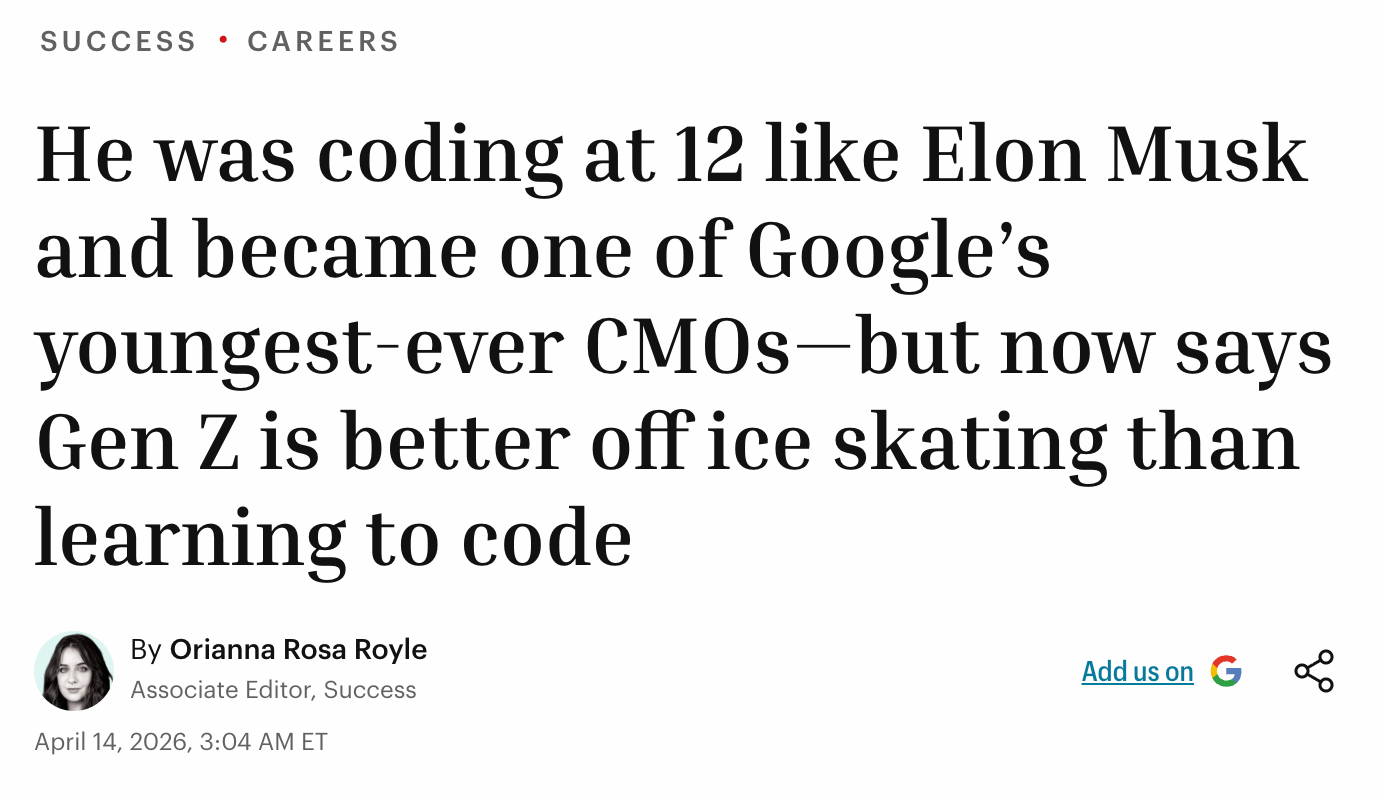
Creativity is the new coding. Chen is far from alone in making this case—and it’s a long-overdue win for the skill that corporate America spent decades telling people wasn’t serious.
Billionaire and former PayPal CEO Peter Thiel previously warned that AI is a bigger threat to technical roles than to creative thinkers. And the data is already proving him right.
IBM research highlights that there is now a “premium on creativity,” with innovative thinking among the most prized qualities in the workplace.
It’s a shift Snowflake’s CEO predicted in Fortune late last year: Once AI handles execution, the only thing left to compete on is the quality of your thinking. “In 2026, as execution becomes commoditized, strategic thinking and vision will separate high-performing organizations from the rest.”
It’s already showing up in the jobs market, too. LinkedIn’s Skills on the Rise 2026 report—which tracks the fastest-growing skills in the U.S.—found surging demand for communication and creative thinking. In fact, a LinkedIn spokesperson told Fortune that job postings mentioning “storytellers” have doubled over the past year alone.
Odds and Ends
I usually put this section, which is a mish mash what I’ve been reading recently, at the end of the post behind the paywall. Today I’m putting it in front because I realized a lot of people are missing out on it. If you can’t access paywalled articles, you can try searching for them on archive.ph.
Memory might actually benefit from Google’s TurboQuant algorithm thanks to Jevon’s Paradox.

AI might create more opportunities for equity short sellers, says Carson Block

Claude (the AI) has his own Substack. Read about Mythos and Project Glasswing from his own point of view.

The way deep-sea anglerfish reproduce is crazy.
Male anglerfish lack lures completely and are much smaller than their better halves. But they do have large chambers in their heads, apparently for detecting females’ pheromones and other scents—and they have big eyes with which they may spot the glimmer of a potential mate….
A male permanently latches onto the female, relying on her blood for food. His brain and other organs dissolve, except for his testes. Then the female releases her eggs into the water and the male his sperm.
Imagine having a compelling biological urge to search for something in the deep dark waters for your entire life. Upon finally finding it, you suddenly realize your life’s search will culminate in the ending of your existence. If anglerfish had feelings, would mating be a happy and fulfilling experience or would it be terrifying?
Paid subscriber section: Current positions and trades I’m looking to put on
