
Warning signs for the end of the AI boom

Long AI infrastructure and supply chain is my biggest exposure right now, but like with every investment, one needs a framework for identifying the turning point for when to get out. In this post I’ll lay out my framework for timing how long I’ll ride the trend and detecting warning signs for when the boom will end.
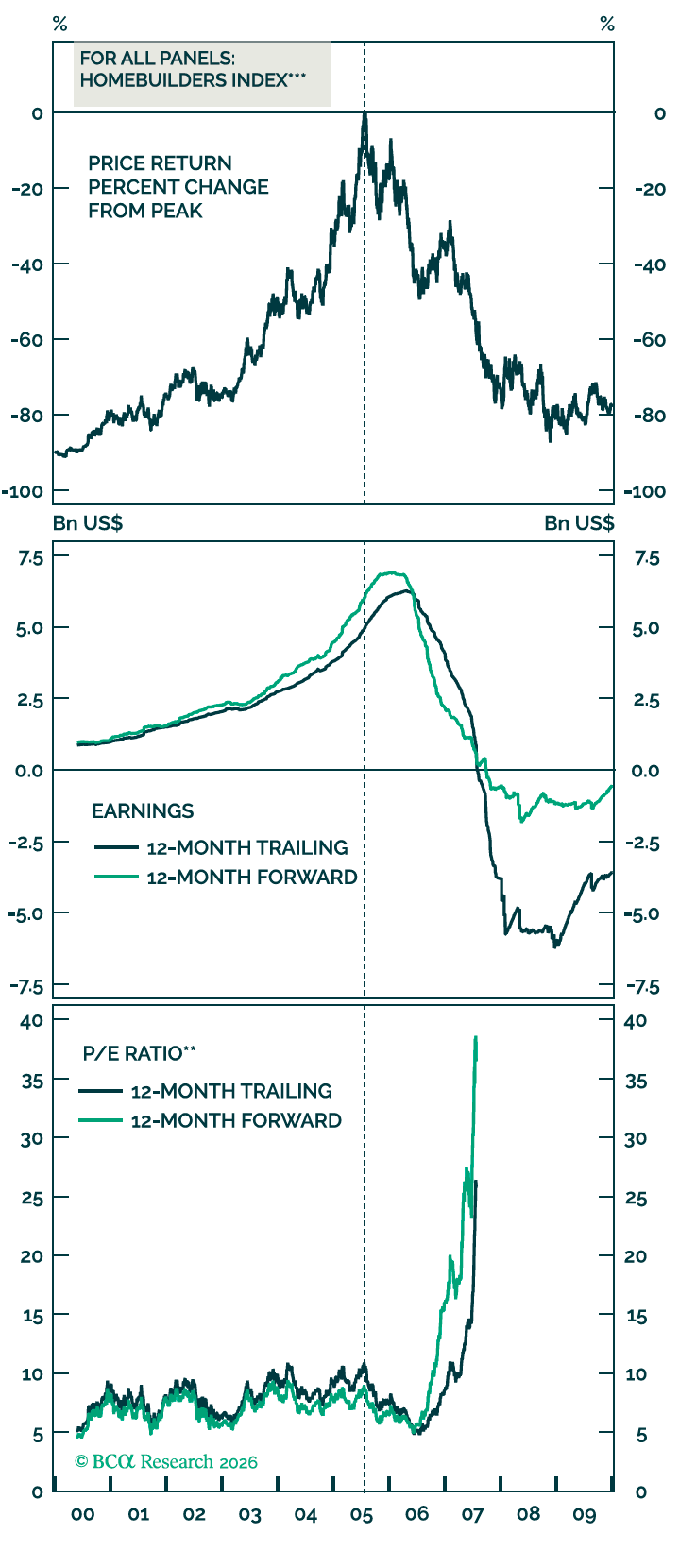
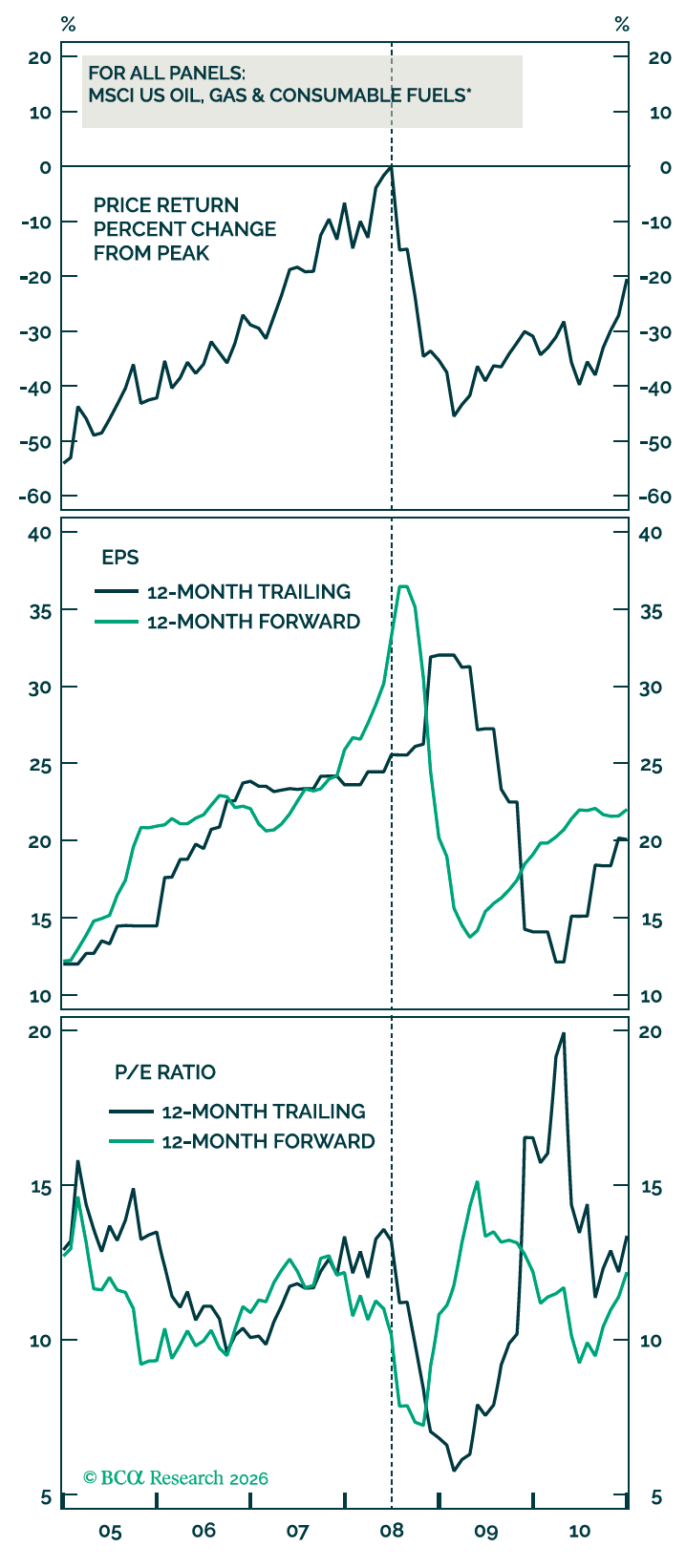
Previous booms in markets show a consistent pattern where equity prices top out before analyst start downgrading earnings forecasts and well before reported revenues roll over.
During the 2000-2006 housing boom, the homebuilders index peaked six months before forward estimates flatlined and a year before trailing earnings peaked:
During the energy boom of 2005-2008, energy stocks peaked a few months before forward estimates and almost a year before trailing earnings flatlined.
During the covid bull market, covid beneficiaries peaked a few months before forward estimates peaked and a year before earnings rolled over:
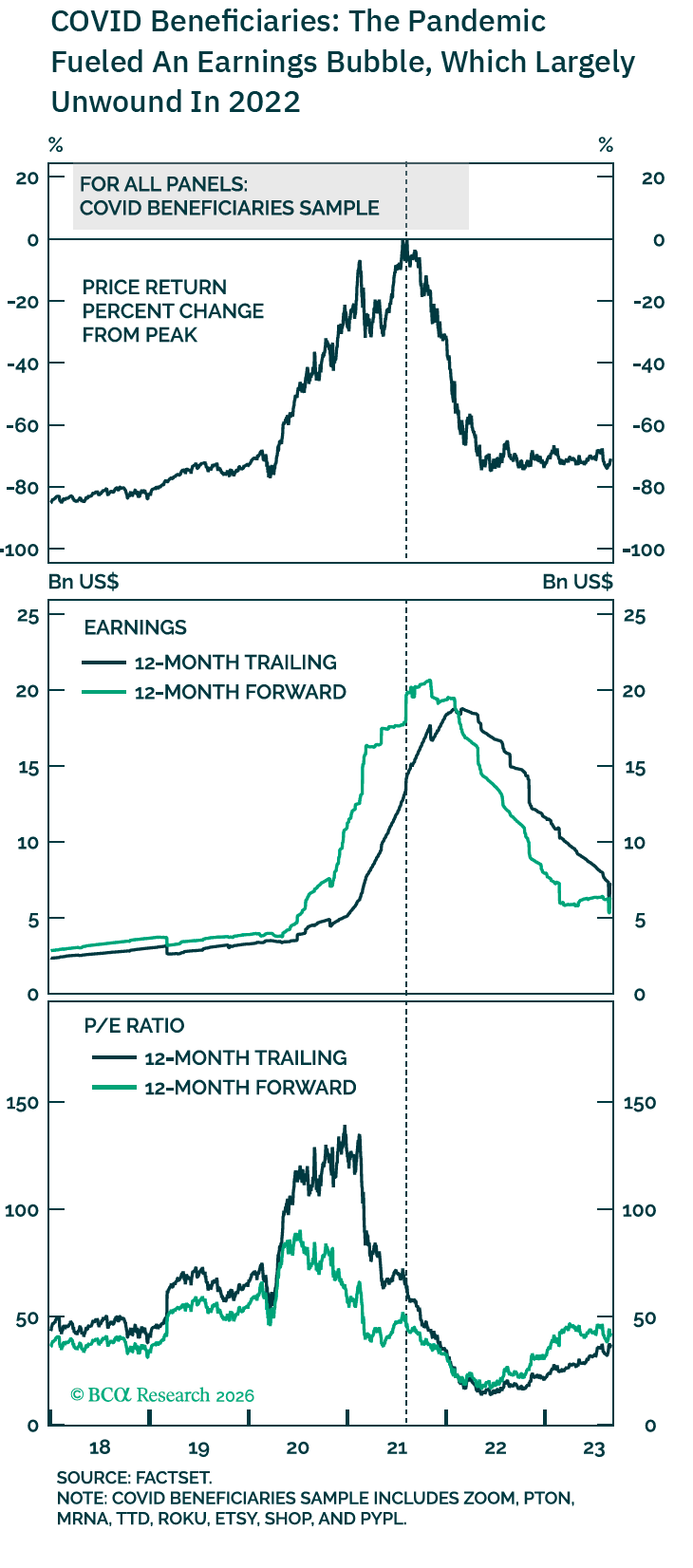
You get my point. Equity prices are a forward discounting mechanism so it is not sufficient to rely on forward estimates or trailing earnings to decide when the party is over. Even coincident indicators such as South Korean export data isn’t enough. We need better leading indicators to determine the health of the AI boom.
The leading indicator - Anthropic revenues
Anthropic has been the dominant revenue leader in the model and agentic layer. When AI stocks took off in February, it was because revenues at Anthropic and demand for tokens at every LLM inflected sharply higher with the introduction of Claude Code and Openclaw. Anthropic is now raising a new funding round at more than a $900b valuation, based on expectations of $10.9b of revenue in Q2. Anthropic’s revenues are doubling every quarter, achieving some of the fastest rates of growth in corporate history at such a large scale.
Dario Amodei, in his interview on the Dwarkesh podcast, explains how projected revenues inform decisions on how much compute Anthropic needs to invest it. The challenge is that compute is usually not available until two years from when you commit to it. Make the wrong projection and invest too much, and your company will go bankrupt. Invest too little, and you won’t have enough compute to serve a good product and meet customer demand. Fortunately, Anthropic is feeling good enough about revenues that they were recently able to sign a $1.25b per month deal with SpaceX to rent 300 megawatts of compute (the entire Colossus 1 datacenter in Tennessee).
The forward purchase commitments for compute enable cloud provides to invest into building datacenters and purchasing GPUs, CPUs, and other hardware, which in turn boosts the revenues of AI infrastructure and supply chain companies.
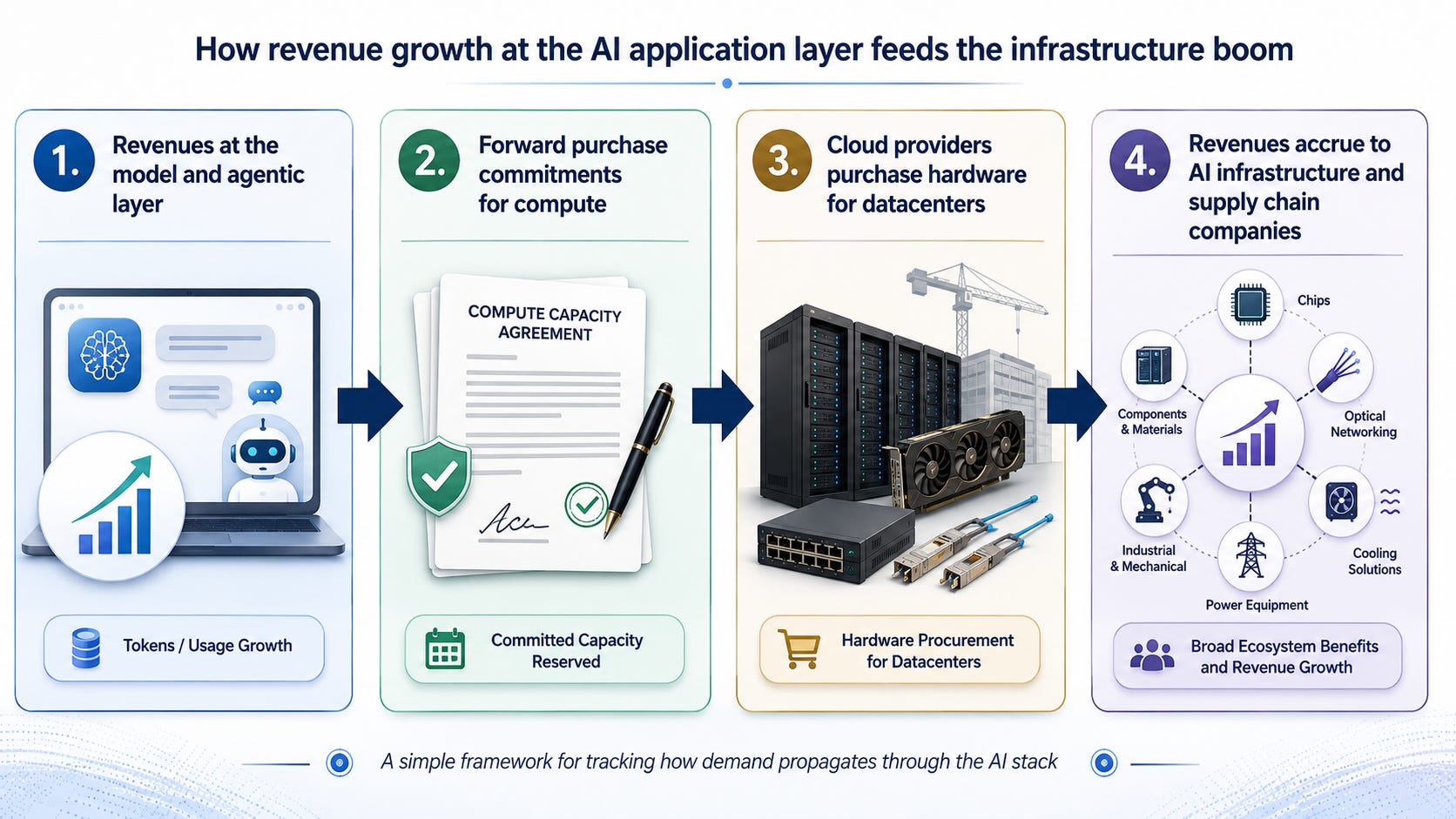
It is economically unfeasible for Anthropic’s revenues to continue to double quarter after quarter. At some point the growth rate will slow down and force the market to re-extrapolate how much compute is required to serve the customers at the model and application layer. The moment when the market senses that supply and demand for compute is about to become balanced will likely coincide with the peak of the AI infrastructure equity boom.
Bottlenecks are bullish so the opposite must be bearish
The buzz word for the AI boom has been “bottleneck”. The sectors of AI that have seen the biggest gains (such as memory and optical networking) are the sectors that have seen both a supply shock and a demand shock. The companies experiencing bottlenecks today are investing heavily into building more capacity to meet the demand shock. Investing in more capacity is a double-edged sword. On one hand it allows the companies to meet growing demand and sell more volume and therefore make more profits. On the other hand, it cripples the bottleneck narrative that made your stock so attractive in the first place.
For now, memory makers such as SK Hynix don’t envision supply deficits easing until 2030. Analysts see the bottleneck lasting well through 2027.
Other useful leading indicators
BCA Research points to several leading indicators to watch:
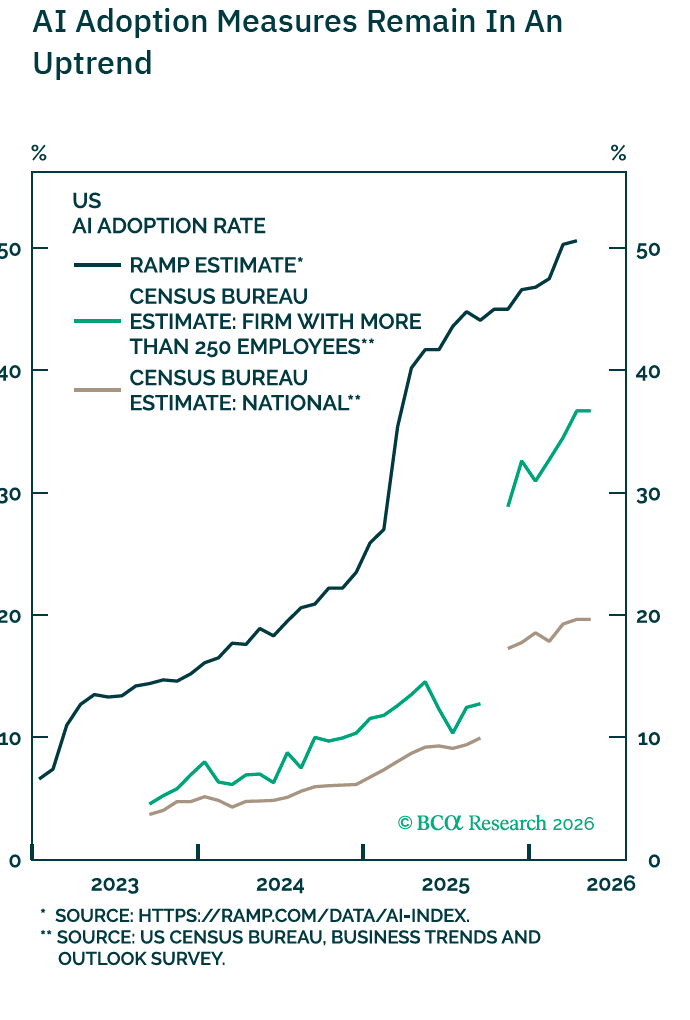
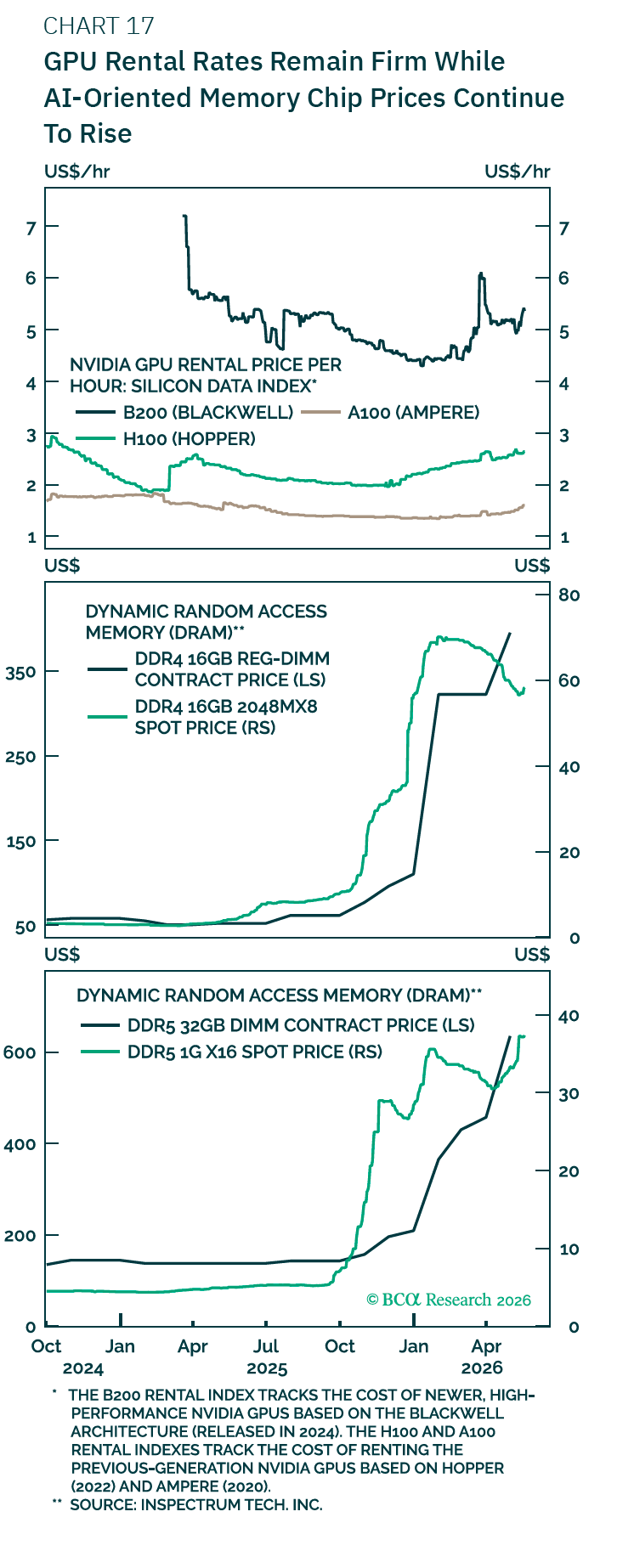
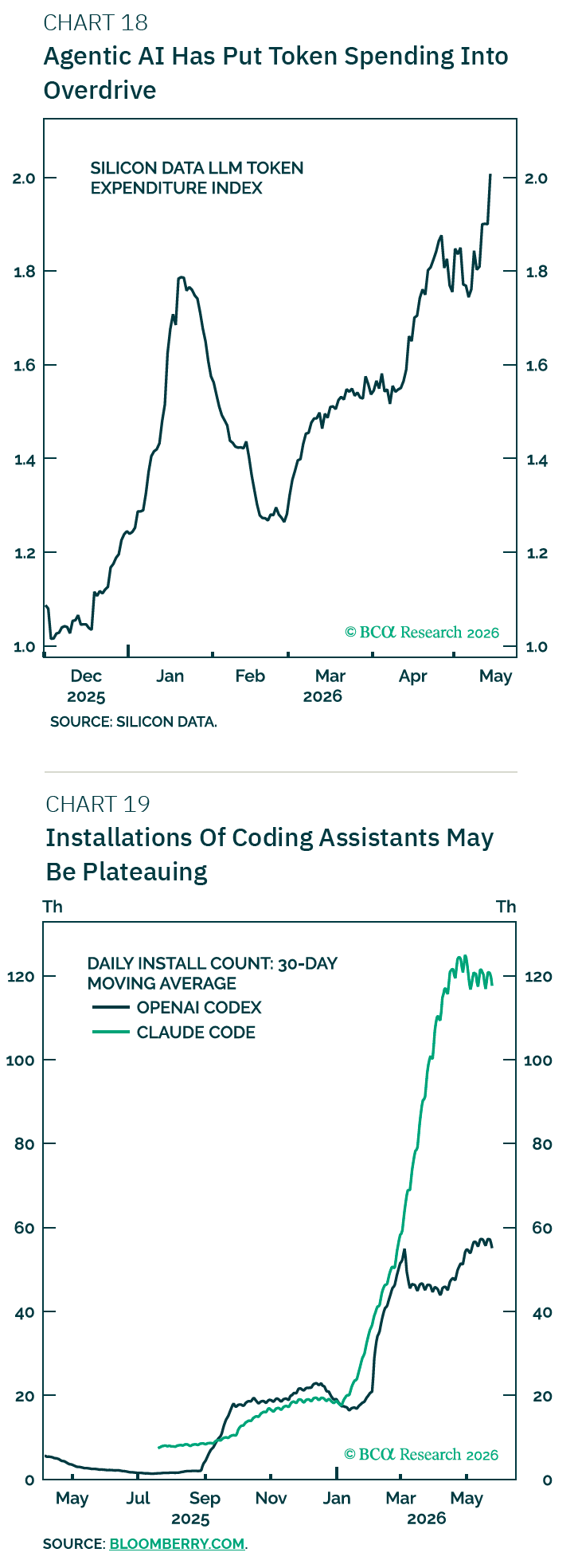
Out of all the indicators above, GPU and DRAM memory prices would be my preferred indicators as market-based prices incorporate both supply and demand signals.
Paid subscriber section:
What do indicators say about where we are?
Why traditional economic indicators are bad at measuring the economic value of AI.
